
What Do Programmers Read?
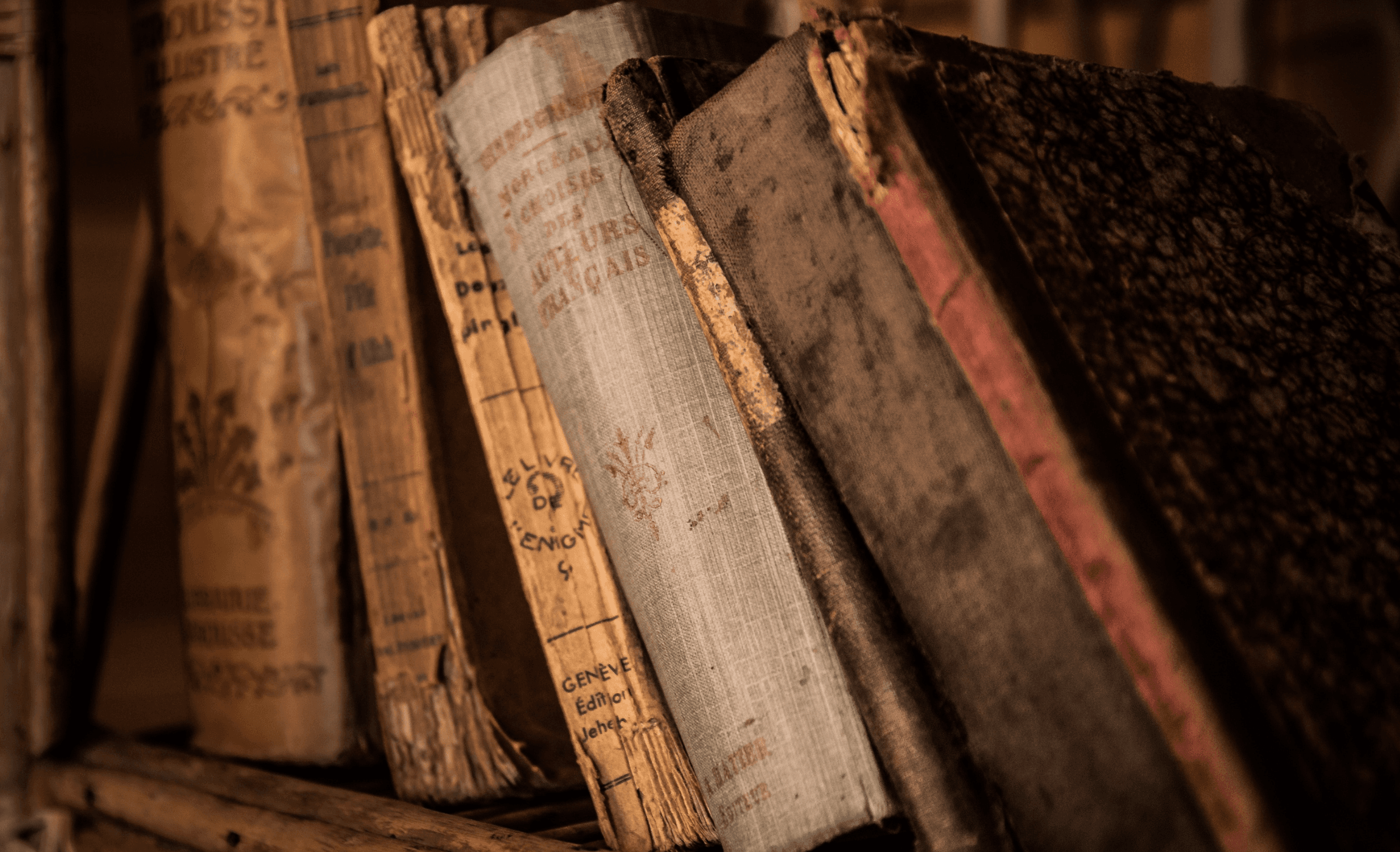
I am a huge fan of books. I collect them, read them, and never throw them away. I have a very intimate relationship with books - for me, they are a measure of growth, intelligence, and knowledge passed down through generations.
Mateusz Jabłoński


From this article you will learn:
- What reading has to do with programming
- What I read
- What I recommend reading
Today I will start with some very intimate memories. From my earliest years, my mother tried to instill in me a love of literature. I remember that my first book was Historia Polski dla Piotrka by Stanisław Marciniak - I was definitely too young for its contents when I received it, but apparently I leafed through its pages with great reverence. That book, by the way, is still with me today. Its condition has deteriorated over almost 30 years of intense use - but the memory remains.
Books have accompanied me throughout my whole life. I assume that every book can teach us something valuable - it can help us gain valuable knowledge, awaken a passion for learning about the world, or give us a chance to discover new feelings.
I used to read a lot. In school, admittedly, I got only twos for assigned readings, regardless of whether I read them or not. So at some point I stopped reading them (I hope this secret from my childhood will not reach my Polish teachers). This does not mean that I have gaps in school literature - I caught up years later, appreciating its value with time.
I think I can safely say that close to 70% of my book collection, which contains well over 1000 copies, has been read by me - the rest is waiting, just like school readings once did, for better times.
What Does This Have to Do with Programming?
A lot. Contrary to appearances, a lot, because we can draw a large part of programming knowledge from books. We have at our disposal: books that help us develop hard technical skills (these books should be read slowly, with a computer nearby); books that improve our soft skills, such as communication - possibly the most important skill in IT; and finally, books that let us relax. It is good to read some fiction from time to time - maybe even in English - because it will let us expand our vocabulary, improve grammar, and ultimately communicate better. In his book Zawód: Programista, Maciej Aniserowicz stated that the most important language a programmer should know is English. It is hard to disagree with him.
What Do I Read?
The times when I spent every evening or night reading books are gone forever. Life, wife, child, and other activities have somewhat limited my carefree "wasting" of time. This does not change the fact that I read - and I try to read more and more. At the beginning of every year I make a list of 10-12 books I would like to read that year. This year I managed to finish, or I am currently finishing, titles such as:
- Zawód: Programista - Maciej Aniserowicz
- Sposób na listę to-do. - Damon Zahariades
- A Game of Thrones: A Dance with Dragons (both parts) - G.R.R. Martin
- The Name of the Rose - Umberto Eco
- Nawyki 2.0 - Maciej Wieczorek
- Sapiens: A Brief History of Humankind - Yuval Noah Harari
As you can see, the range is very broad. From books about development and becoming a better programmer, through literary classics, all the way to contemporary bestsellers.
Books, Blogs, Audiobooks, Ebooks...
Does the format matter? It does not. Every medium will give you the same thing - it mostly depends on your individual preferences. Personally, I try not to limit myself - while driving, running, or walking, I listen to podcasts and audiobooks. In bed or on vacation, I definitely keep a paper book with me. In the company restroom or while waiting at the doctor's office, I always reach for an ebook (ebooks convinced me the latest).
The Internet is saturated with content that waits for us to sit down with it, but that we cannot read at a given moment. It is worth using applications such as getpocket.com, which collect what we consider worth reading - I use it myself, thanks to which I can easily return to an article that interested me.
What Should You Read?
What you like. Still, try to reach for different literary genres, and do not hesitate to look into technical literature, reportage, and books about development. Remember that a characteristic of intelligent people is broad awareness of the world. The knowledge you gain while reading may be useful even in a programmer's work - the projects we work on in IT come from very different industries. For example, I built stores for liquid probiotics, made-to-measure suits, DNA tests, LED strips, nail polish, sports equipment, and pet food; I created applications for managing a warehouse, a car parts factory, time, credit card data, and glasses sales; I wrote websites for a construction equipment rental company, a private school, a Montessori preschool, a bus ticket seller, and many, many others. You never know where and when what you read will become useful.
Look at the world as broadly as you can.
Summary
Knowledge can be acquired in different ways. The books you read or listen to can change, and will change, your perception of the world, broaden your horizons, and let you move freely through many topics - regardless of whether you use that knowledge to win new clients, while working on an IT project, or in private conversations to build new relationships.
With this article, I would like to start a new series of blog posts - posts about development. New content will appear every week - once a technical post, once a lighter one connected with development. You are welcome to join.






Comments (0)
No one has posted anything yet, but that means.... you may be the first.